Growing food in space is much harder than growing it on Earth. Plants need the right amount of light, water, and nutrients, but astronauts don’t have time to check every plant every day. To solve this problem, researchers have created a new stretchy sensor that grows along with plants and monitors their health automatically.
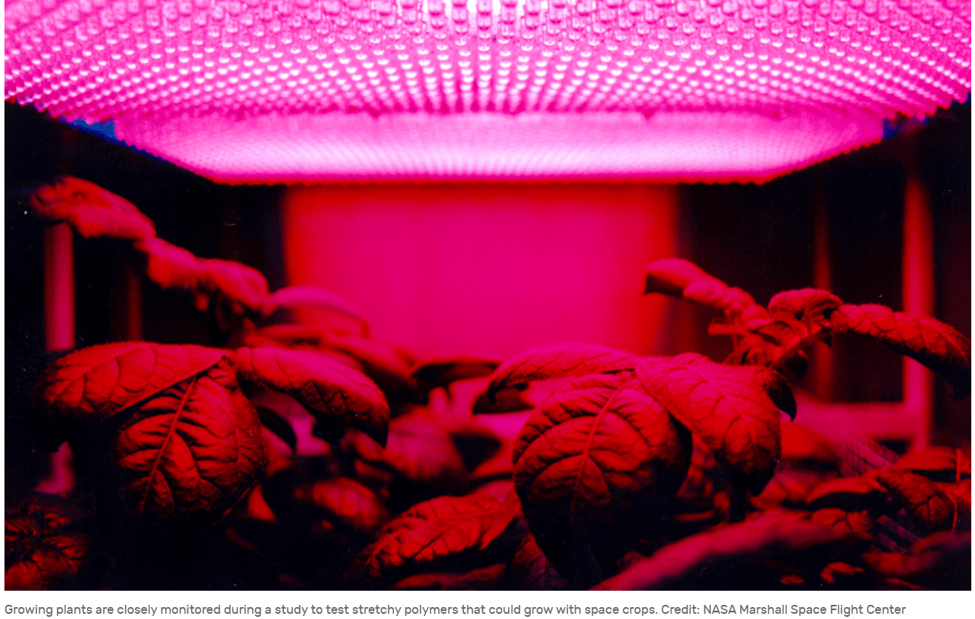
The sensor, developed by scientists at the University of Illinois Urbana-Champaign with support from NASA, is attached to a plant using medical-grade glue. As the plant grows taller and thicker, the soft sensor stretches with it and measures changes in the plant’s size. It then sends this information wirelessly, allowing scientists to monitor plant growth without disturbing the plant or taking manual measurements.
This technology is especially important for future space missions to the Moon and Mars. While astronauts on the International Space Station currently receive regular food deliveries from Earth, longer missions won’t have that luxury. Fresh fruits and vegetables will need to be grown in space, making reliable plant monitoring essential.
Plants also provide more than just food. They can improve astronauts’ mental well-being by bringing a touch of nature into the isolated environment of space. Having fresh plants around can make long missions feel a little more like home.
To test the new sensor, researchers attached it to oat plants. The results were very good. The sensor stretched to more than four times its original size without falling off or affecting the plant’s growth. It also worked well in different temperatures and humidity levels, making it suitable for the challenging conditions of space.
The researchers now plan to test the technology on leafy vegetables and tomato plants. They hope the sensors will eventually track not only plant height but also the size of fruits and vegetables. One drawback is that the current version of the sensor can only be used once, but scientists believe future improvements will make it even more practical.
Also, this invention could benefit more than just astronauts. Similar sensors could help farmers on Earth monitor crops more efficiently, improve food production, and better understand how plants respond to changing climates.
I think this is a fascinating example of how technology and nature can work together. A small, flexible sensor may not seem like a groundbreaking invention, but it could make a huge difference for future space missions. I also like that this research has benefits beyond space exploration. If the same technology helps farmers grow healthier crops on Earth, then everyone could benefit. It shows that innovations designed for space often end up improving life here at home as well.
Source: https://www.astronomy.com/space-exploration/its-hard-to-grow-food-in-space-these-sensors-can-help/


Leave a Reply